AVALON VR
Overview
Narrative & Setting: As a skilled cybernetic warrior, Agent Nexus continues their quest to unravel a dark conspiracy that threatens the city's very existence. Equipped with high-tech weapons and enhanced reflexes, Agent Nexus must navigate through a cyberpunk dystopia, battling rogue AI, augmented mercenaries, and mega-corporation security forces.
Purpose & Goals
My goal for this game was to design a groundbreaking prototype for a VR experience that would eventually evolve into an expansive MMO. Players would have the creative freedom to build and shape their own worlds. The project aimed to showcase the cutting-edge capabilities of Unreal Engine 5, demonstrating its potential to revolutionize immersive gameplay and world-building.
The demo’s success was a testament to this vision, ultimately securing $13 million in funding to bring the concept closer to reality.
Genre: Hack & Slack | Sci-Fi
Team Size: 10
Duration: June 2021 - October 2021
Platform: VR
Engine: Unreal Engine 5
Canceled Game
Role(s) & Responsibilities
-
Producer
-
Narrative Design
The Process
Research, References, & Key Takeaways
This project drew heavy inspiration from Dungeons & Dragons and Ready Player One, incorporating elements of player-driven storytelling, immersive roleplaying, and boundless creativity within VR. Agent Nexus navigates a chaotic futuristic world filled with high-stakes battles, moral choices, and powerful enemies
These are just some of the questions I ask when developing:
Q: What is the player fantasy?
A: Players step into the role of Agent Nexus, a cyborg thrown into a city of chaos while trying to uncover the truth behind their family’s loss. They’re tasked with infiltrating a city overridden by rogue AI, battling against infected androids, and making pivotal decisions that shape their story.
Q: What will it look like?
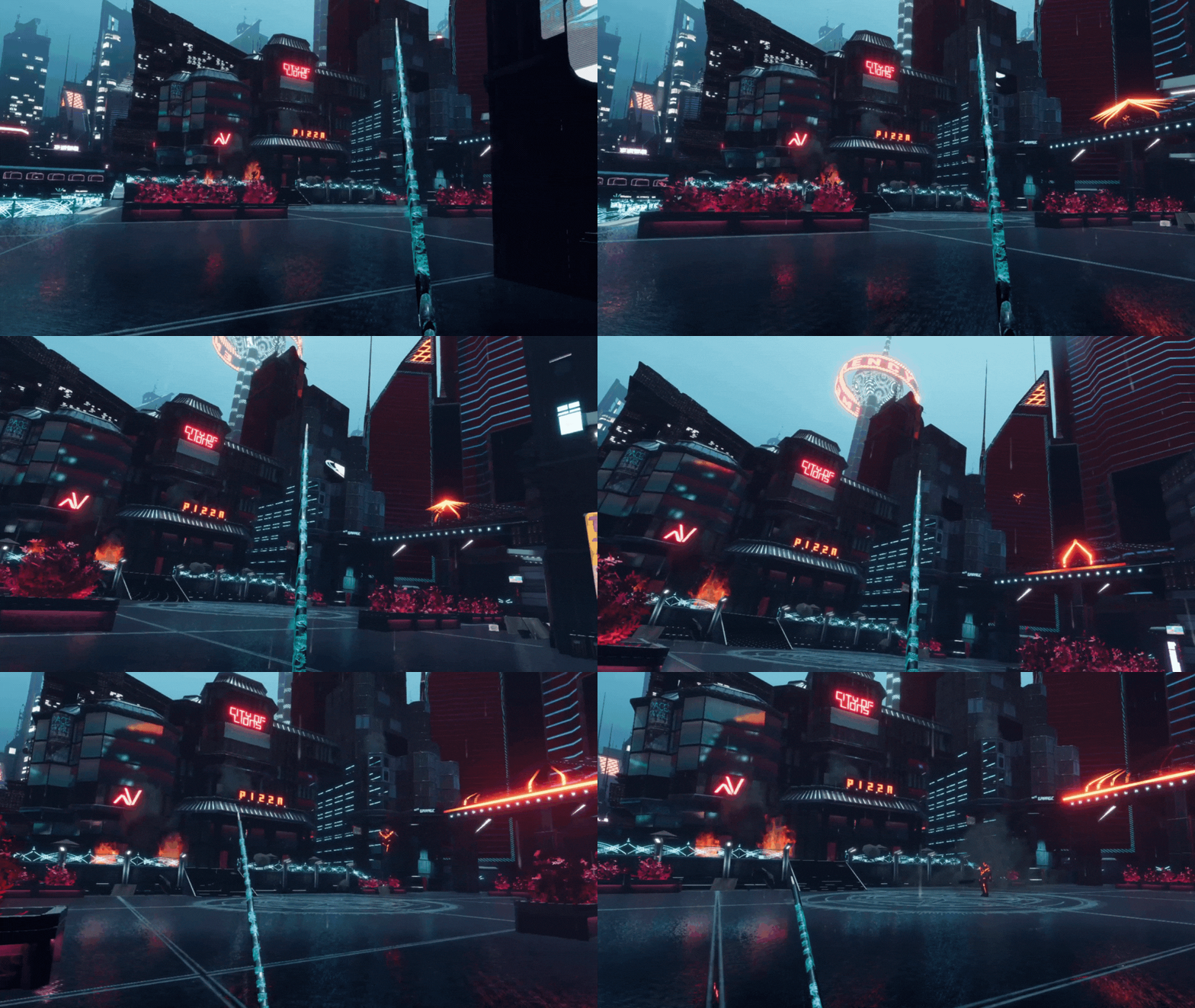
A: The game will feature vibrant neon-lit cityscapes and desolate urban ruins where danger lurks around every corner. VR gameplay would immerse players in chaotic streets overrun by glitching androids and burning infrastructure.
Q: How will we make this happen?
A: Using Unreal Engine 5, the game would leverage VR technology to create a deeply immersive experience with high-fidelity visuals and interactive environments. Combat would incorporate a mix of ranged and melee attacks, such as Nexus’ digital pistol and futuristic weapons. Adaptive AI will ensure enemies provide a balanced but challenging experience.


Gameplay and Narrative Design
The game centers around creating an immersive, choice-driven experience that blended fast-paced combat with an engaging story. Players, taking on the role of Agent Nexus, would navigate a dystopian city teeming with rogue AI and infected androids.
The mechanics incorporated dynamic swordplay and ranged combat, allowing players to switch between calculated precision strikes with a blade and long-range weaponry.
The boss fight with GALA, a towering mech wielding a cyber sword, players can use their own sword skills to block and strike while avoiding devastating attacks. Player choice plays a crucial role in shaping both the narrative and gameplay, choosing between saving civilians in distress or prioritizing disabling the AI's signal to minimize further destruction.

Production
As the producer, I oversaw the development process from concept to prototype, ensuring the team's vision was realized efficiently and on schedule.
Daily meetings with the design, art, and programming teams kept everyone aligned and allowed me to address potential roadblocks before they became issues. I ensured milestones were met by breaking down tasks into manageable sprints and closely tracking progress.
Organizing live playtest sessions with audiences provided valuable feedback, which we used to refine both the gameplay mechanics and narrative flow. These sessions also helped identify areas where the swordplay, enemy AI, and player choices could be further polished to enhance immersion and engagement.
Challenges
A significant challenge during development was learning and adapting to the new Unreal Engine 5 and its capabilities. Specifically, issues with Nanite and translucent shaders arose, as they were not yet fully functional or patched during our production timeline. To overcome this limitation, we implemented additive shaders as an alternative whenever translucent materials were required, ensuring visual consistency without compromising performance.
Another hurdle was designing and optimizing levels for VR, a new experience for most of the team. Developing for VR required mastering optimization techniques to maintain performance while balancing visual fidelity. Additionally, we prioritized minimizing motion sickness for players, which involved careful design considerations like adjusting movement mechanics, field of view, and environment layout.
Although the project was ultimately canceled, the experience emphasized the importance of blending player agency with immersive, dynamic environments and provided valuable insights into designing for VR.