LEYLINE KNIGHTS
Overview
Narrative & Setting: The world is blessed with Magic, a resource allowing those who wield it to control elements of the world. Magic has also caused humans to share the world with the Magickblood, non-human people born as elements. All the kingdoms fight over points in the world. called Leylines, where magic springs forth. One of the last few Leyline held by the Magickblood sits at the peak of a large tree piercing the sky called the Great Tree.
Purpose & Goals
The goal of this project was to develop and publish a complete game, gaining hands-on experience through every phase of production—from pre-production to post-launch. As the Art Lead, I aimed to refine my skills in mentoring junior artists, designing efficient art pipelines for 2D and 3D assets, as well as VFX and shaders, and ensuring their seamless integration into the game engine. Additionally, I sought to explore how art could communicate a compelling, unspoken narrative within the world, working in harmony with the spoken storytelling to enrich the player’s experience.
Genre: Top-down 3D Roguelike | Fantasy
Team Size: 15
Duration: October 2020 - May 2021
Platform: PC | Play Now
Engine: Unreal Engine 4
Role(s) & Responsibilities
-
Art Lead
-
Creation & Maintenance of Art Style Guide
-
Creation & Maintenance of Art Pipelines
-
Mentoring Junior Artists
-
QA Testing & Marketing Assets
-
-
VFX & Shader Artist
-
Character & Environment VFX
-
Post Processing Shaders
-
Environment Material Shaders
-
3D Asset Creation
-
The Process
Research, References, & Key Takeaways
Leyline Knights utilizes a light-hearted stylized fantasy themed setting similar to Genshin Impact. Humanoid characters are stylized in 3D to ‘cute’ stylized proportions to exaggerate features. High saturation colors fill the environments and the supernatural magic brings bright color into the scene. Hand painted textures are used through out with depth and shadows defined in texture work. Whites and dark greys are used for highlights and shadows.
These are just some of the questions I ask when developing:
Q: What is the player fantasy?
A: A magic-wielding knight in search of powerful magic to help her sick younger brother.
Q: What will it look like?
A: Three distinct environments, each tied to a unique elemental power of magic, brought to life with vibrant, stylized colors. Each environment reflects the essence and culture of the Magickblood who call it home. Wield a trusted weapon and harness powerful magic abilities to ascend the towering Great Tree. Unlock and upgrade skills to overcome unique challenges while navigating the winding labyrinths.
Q: Does this world make sense with the player fantasy?
A: Yes, because each world embodies a specific element that players must master to ascend the Great Tree and reach the source of the Leyline. Each environment and level must feel distinct yet cohesive, reflecting the essence of the element they represent. Enemy designs are crafted to visually communicate their elemental affinity and weaknesses, allowing players to strategize at a glance.
Q: What is required to bring this world to life?
A: Bringing this world to life requires a diverse array of enemy types, elemental abilities, and challenging bosses that align with the game's core themes. Each environment demands a tailored set of assets, complete with detailed concept art, VFX, and shaders to create a visually cohesive and immersive experience.
Q: How can you make the conflict visible in the world?
A: Conflict can be made visible by using environmental storytelling, such as strategically placed assets that depict the tension and struggle between the Magickbloods and Humans—abandoned battlegrounds and shattered architecture..
By prioritizing the player fantasy, we can construct worlds that not only visually captivate but also support and enhance the core experiences that players seek. This alignment ensures that every aspect of the game world serves to elevate the player’s immersion and enjoyment, making the fantasy a lived reality.


Environment & Level Design
The environment is built as rooms being supported by the Great Tree, viewed in isolation as one room is passed to the next. The rooms are built with modular environment pieces. Each room should look as though it is land ripped from the ground by the Great Tree. This creates a feeling of whimsy and aids in readability in a top down perspective.
Candlekin Stratum is a war-torn forest burnt to ashes. Strewn about are various charred out hulls of armor typical of medieval knights with molten blades burnt into or through them. Candlekin knight was a lead commander in battles against the various human kingdoms who attempted to claim their land.
Slimefolk Stratum is a snowy mountain forest. An aurora borealis can be seen above while various snow sculptures of Slimefolk are strewn about. The Slimefolk adapted to their newfound homes within the freezing mountains after being displaced from their lakeside kingdoms by humans. They built stone homes from the mountain stone.
A metal integrated electric desert. A constant thundering rain is pouring upon the desert with lightning rods adorned with metallic sculptures in offering are placed about.
Automaton Stratum is a dry dessert wasteland. Trees became cold metal lightning rods only useful to the automaton, soil became dust, and a constantly striking lightning plague the automaton kingdom. The automatons were bold in their magic experiments to morph the land to deter humans, their magic knight being the most bold of them.


Characters
Elizabeth and Rubyn, the protagonists of the story, stand out as clear outsiders in the world of the Great Tree. Elizabeth, a human knight, bears a stark and imposing figure with her magical arm and eyepatch marked by a glowing sigil, contrasting heavily with the natural, elemental forms of the native inhabitants. Rubyn, with his lack of magic and a youthful eagerness for adventure, appears even more out of place in a world brimming with mystical beings and ancient traditions.
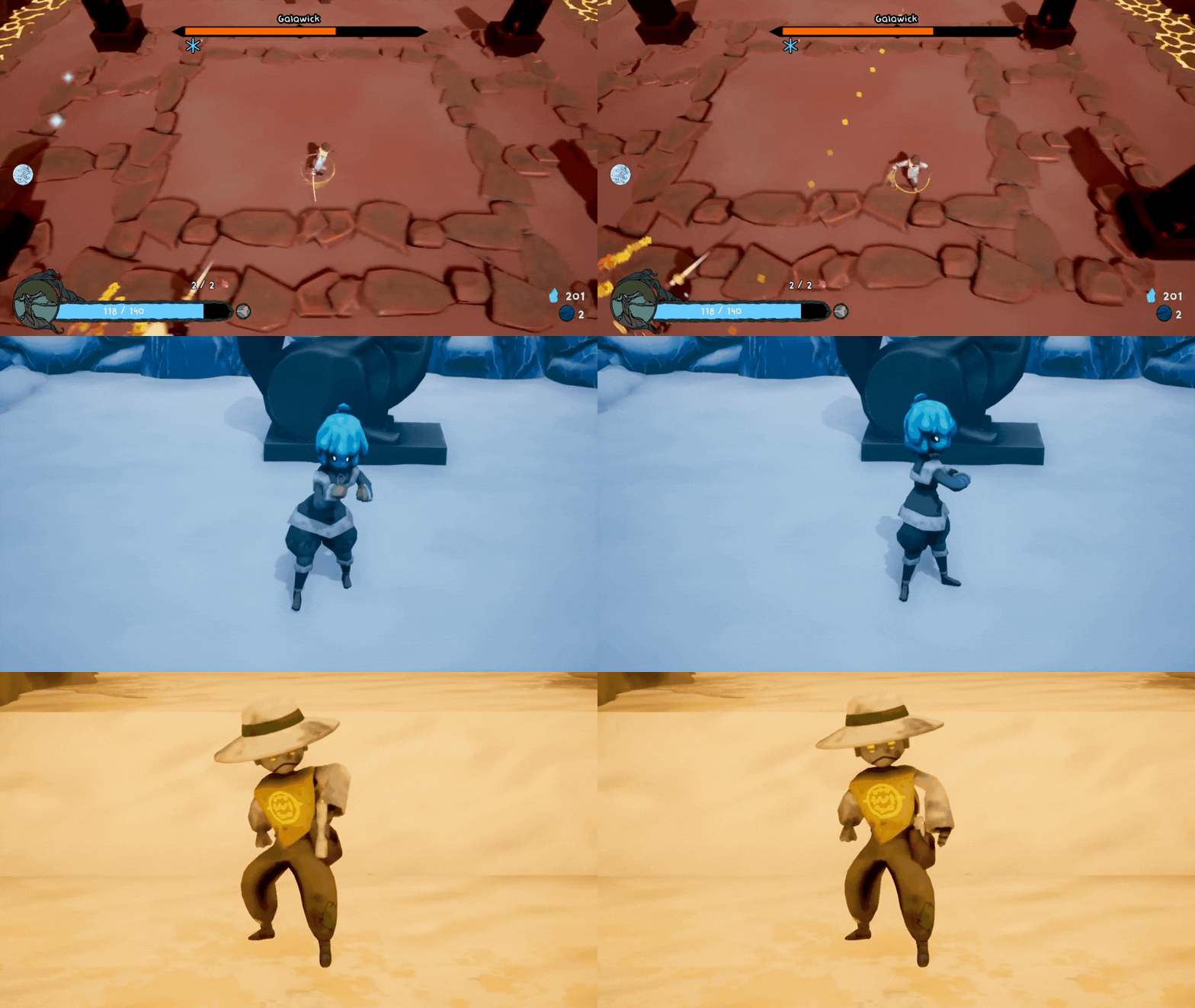
In contrast, the natives—the Candlekin, Slimefolk, and Automaton—are intrinsically tied to their environments, their appearances and lifestyles seamlessly blending with the world around them. The regal Galawick, a Candlekin knight of living flame and wax, defends his people with honor; Qinu, the icy, liquid-bodied Slimefolk brawler, fights with chaotic ferocity; and Z.E.E., the Automaton sharpshooter, embodies mechanical precision and a cowboy flair. This juxtaposition between the protagonists and the natives creates an unspoken narrative of disconnection and otherness, emphasizing Elizabeth and Rubyn's role as outsiders navigating a world they do not fully belong to.


Narrative Design & Gameplay
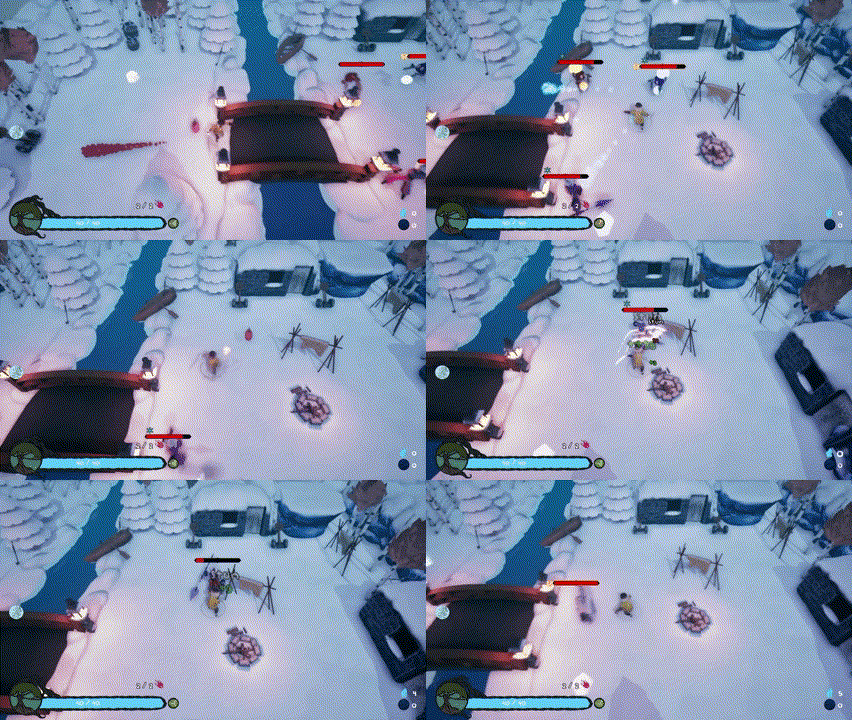
The environment and gameplay mechanics are intricately tied together, with each area’s traps and visuals serving not only to challenge the player but to deepen immersion into the world. Elizabeth’s ability to master and combine elemental powers directly influences how players interact with the environment, allowing for dynamic gameplay where the environment itself can be manipulated.
The Candlekin's traps such as fiery spike traps, fireballs, and lava pits, are visually designed to evoke the heat and danger of their environment, immersing the player in a sense of urgency and survival. The Slimefolk's traps, like living snowmen and freezing snowballs, are visually distinct and add a sense of playfulness mixed with danger, while the explosive ice crystals enhance the feeling of a volatile, unpredictable world. The Automaton’s mechanical traps, such as lightning rods and electro spinners, bring a sense of high-tech menace, combining visuals of electricity and danger to create a thrilling atmosphere.
The bosses also reflect their environments, with their attacks visually embodying their elemental nature. Galawick's heated rapier and explosive candles provide fiery visuals that evoke both grace and chaos, while Qinu’s water and ice-based attacks, like summoning a frozen shark or diving below the surface, create a fluid, unpredictable fight. Z.E.E’s plasma pistol, laser beams, and lightning strikes visually present a futuristic and high-energy combat style, offering intense action. These visuals, combined with the gameplay mechanics, draw the player further into the experience, making each fight and trap feel like a natural extension of the world.
Challenges
As the Art Lead, the challenging part of this project was making sure the level design assets the environment artists created were accurate to what the creative director envisioned. A few assets that were created did not reflect the intentions of the creative director and caused a minor bottleneck in production for the level designer. This was resolved by creating more concept art that reflected the correct assets.
Another challenge as Art Lead, was having an environment artist temporarily leave the team due to medical needs. The producer and I didn't want another bottleneck in production since we now only had one environment artist. To resolve this, we slightly shifted the scope of the assets and a few of environment assets were handed off to me to make sure we meet the production deadlines until the second environment artist was able to return to the team. I had never made environment assets such as foliage or rocks before so this was a great learning opportunity for me. I also had to train another vfx artist to help with vfx tasks to lighten my load while I assisted with 3D assets.